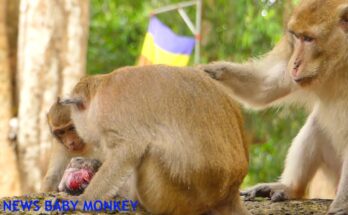
The arrival of a newborn baby is often a joyous occasion, not only in human societies but also in the animal kingdom. Among primates, the birth of a baby monkey symbolizes hope and continuity, as these intelligent and social creatures rely heavily on their mothers for survival, nourishment, and emotional development. However, life for a newborn monkey without a mother presents unimaginable challenges. A baby monkey born into such circumstances must navigate a harsh reality, where survival depends on the support of the troop, external intervention, or sheer resilience.
The Role of a Mother in a Monkey’s Life
For most primates, maternal care is the cornerstone of early life. Baby monkeys are born highly dependent on their mothers, requiring her constant presence for warmth, feeding, and security. The bond between a mother and her infant is not merely biological; it is deeply emotional and behavioral. Through this connection, the mother teaches the baby essential survival skills such as foraging, social interaction, and recognizing dangers in the environment.
A mother’s presence also serves as a psychological anchor. Baby monkeys cling to their mothers for comfort and reassurance, a behavior that reflects their inherent need for physical touch and emotional safety. In the absence of this bond, a newborn faces profound challenges, both physically and emotionally.
Challenges of Being Motherless
When a newborn monkey is left without a mother, the immediate concern is survival. Without maternal milk, the baby becomes vulnerable to malnutrition and dehydration. Unlike some animals that can quickly adapt to alternative food sources, baby monkeys rely exclusively on their mother’s milk for the first few months of life. Without it, starvation becomes a significant risk unless the baby is adopted by another female in the troop or rescued by humans.
Beyond nutrition, protection from predators is another critical issue. A baby monkey without a mother lacks the shield of her vigilance. In the wild, predators such as snakes, birds of prey, and larger mammals pose constant threats. The baby’s inability to fend for itself makes it an easy target, leaving survival largely to chance.
Socially, the absence of a mother often leads to isolation. In many primate groups, the mother acts as the baby’s primary link to the rest of the troop. Without her, the infant may struggle to integrate into the social hierarchy, making it difficult to secure allies or learn critical social behaviors. This lack of integration can affect the monkey’s long-term ability to thrive within the group.
Emotional and Developmental Impact
The loss of a mother at birth also has profound emotional consequences. Monkeys are highly intelligent animals with complex emotional lives. Studies have shown that young monkeys separated from their mothers often exhibit signs of stress, anxiety, and depression. These emotional scars can hinder their ability to form bonds later in life, impacting their reproductive success and overall quality of life.
Moreover, the absence of maternal guidance disrupts cognitive and behavioral development. Without a mother to mimic, baby monkeys miss out on learning essential life skills. This gap in knowledge can make them less competitive within their environment, further compounding the challenges of survival.
Hope Through Adoption and Human Intervention
While the plight of a motherless baby monkey is heart-wrenching, there are instances of hope. Some primate species display remarkable compassion, with other females in the troop stepping in to care for the orphaned infant. This form of altruism ensures that the baby has a chance at survival, even without its biological mother.
In cases where the troop does not provide support, human intervention often becomes the last resort. Wildlife rehabilitation centers and sanctuaries around the world work tirelessly to rescue and care for orphaned baby monkeys. Through bottle feeding, medical care, and socialization programs, these facilities give the infants a second chance at life. Once they are strong enough, many are reintroduced into the wild, where they can integrate into new troops and live out their natural lives.
Lessons from the Struggles of a Baby Monkey
The story of a newborn monkey without a mother is a poignant reminder of the fragility of life and the importance of caregiving. It underscores the significance of maternal bonds, not just for survival but for the emotional and social well-being of all creatures. Additionally, these stories highlight the interconnectedness of life in the animal kingdom, where the survival of one individual often depends on the compassion and support of others.
For humans, the plight of motherless baby monkeys serves as a call to action to protect wildlife and their habitats. By ensuring the preservation of ecosystems and reducing human-wildlife conflict, we can minimize the circumstances that lead to orphaned animals. Furthermore, these challenges remind us of our shared responsibility to care for the most vulnerable, whether they are human or animal.
Conclusion
A newborn baby monkey without a mother faces extraordinary odds, struggling to survive in a world that demands resilience and adaptability. Yet, amidst the hardship, there is hope—in the form of compassionate troop members, dedicated human caregivers, and the enduring will to live. These stories of survival not only inspire us but also teach us profound lessons about the power of love, care, and community. In embracing these lessons, we honor the lives of these vulnerable creatures and reaffirm our commitment to a more compassionate and sustainable world.